top of page
Tectaria decurrens
(C.Presl) Copel.
(no common name)
Tectariaceae
Tectaria decurrens is a species of fern in the family Tectariaceae. It has a worldwide distribution, from the Americas to Africa to Pacific Islands. It is commonly grown as a houseplant, and has become invasive in parts of the United States.
Description
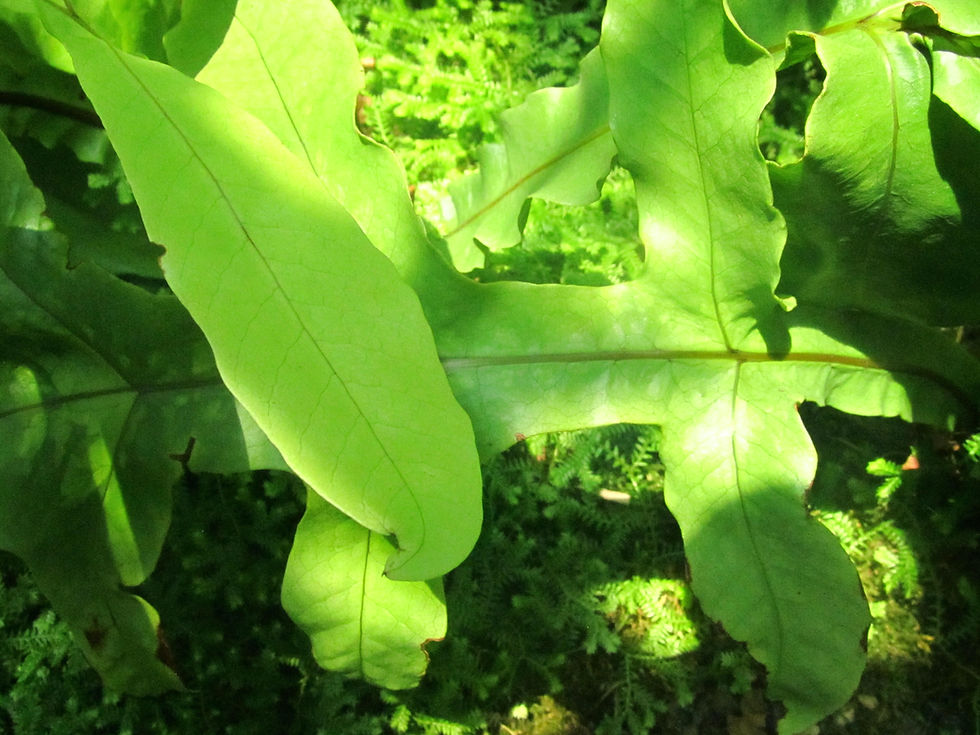
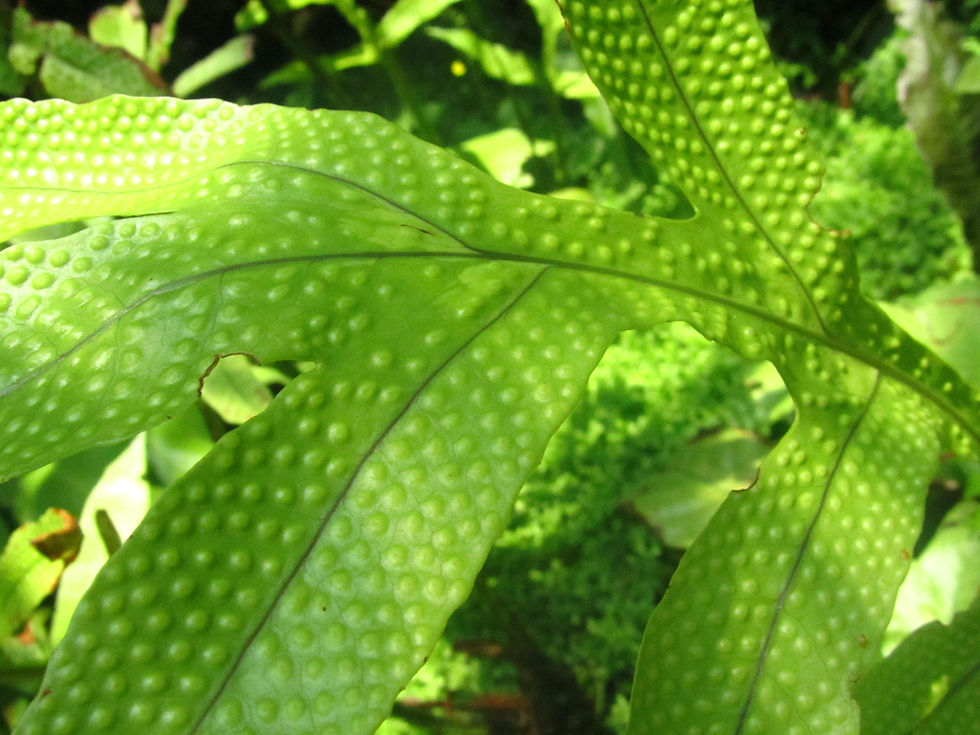
Tectaria decurrens is a terrestrial plant that grows up to 100 cm tall. Its rhizomes are 1.5 to 2 cm in diameter; they, as well as the leafstalk bases, are covered with brown smooth-edged scales. Leaves are large, 30 to 80 cm long and 30 to 40 cm wide on a 35 to 60 cm long stipe, smooth and papery. The blade of the leaf is deep green, ovate, and deeply pinnately lobed. Lobes are lanceolate to elliptical, about 15 to 25 cm long and 3 to 8 cm wide, with a long tip and smooth to scalloped edge. Fertile fronds have narrower lobes. The base is often winged, wedge-shaped; the leaf tip is pointed. Veins are raised on the lower side. Sori are borne in rows between veins; indusia are smooth, round, and are up to 1.2 mm wide (Wu et al. 2013).
Uses
Note: Please see the disclaimer regarding any information about medical or edible uses.
Distribution
This plant grows on rocks, or alongside streams in forests, at an altitude of up to 1200 m. It is found in the Chinese provinces of Fujian, Guangdong, Guangxi, Guizhou, Hainan, Hunan, Taiwan, Yunnan, as well as Taiwan, Philippines, Japan, Nepal, India, Myanmar, Thailand, and Vietnam (Wu et al. 2013).
Status
References
Wu, Z. Y., Raven, P. H., and Hong, D. Y., eds. 2013. Flora of China. Vol. 2-3 (Lycopodiaceae through Polypodiaceae). Beijing: Science Press, and St. Louis: Missouri Botanical Garden Press.
Description
bottom of page