top of page
Dryopteris filix-mas
(L.) Schott
Male Fern
Dryopteridaceae
Dryopteris filix-mas is a species of fern in the family Dryopteridaceae. It is native to North America, Europe, and western to central to southern Asia. It is also cultivated as an ornamental.
Description
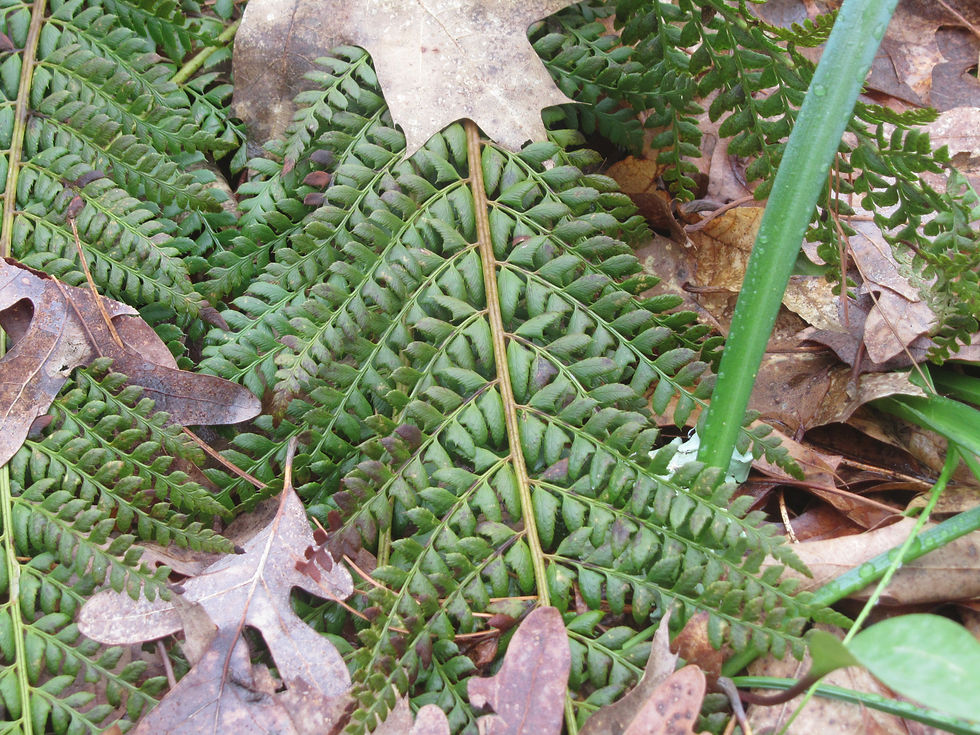
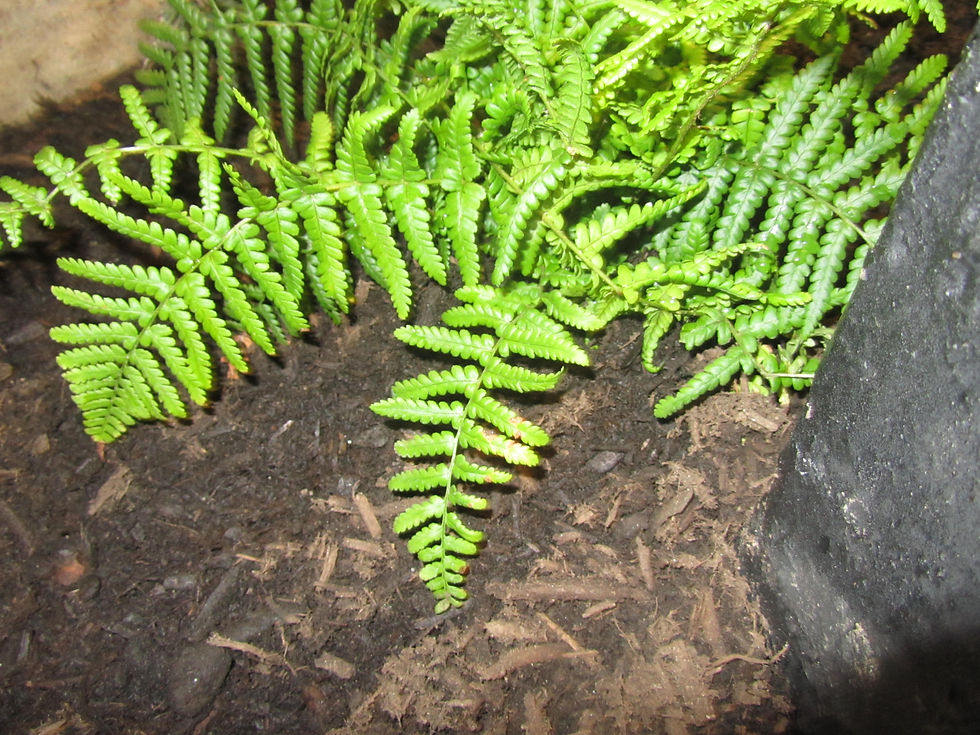
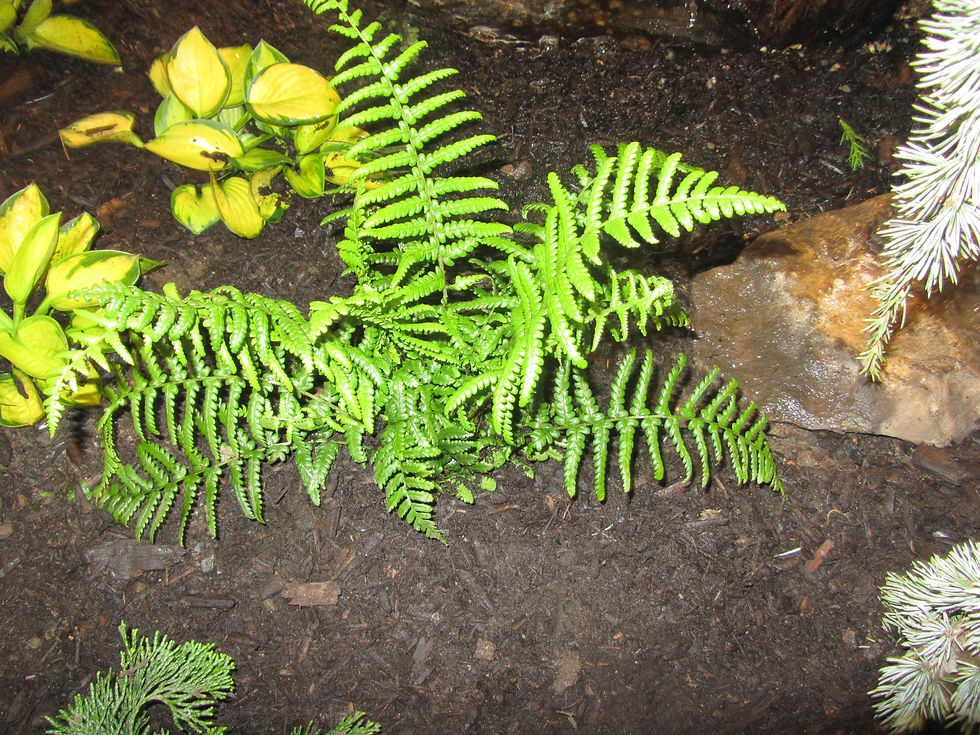
Dryopteris filix-mas is intermediate between two other species of Dryopteris, D. oreades and D. caucasica, and is derived from hybrids between the two (Hoshizaki and Wilson 1999). Dryopteris filix-mas grows up to 120 cm tall. The plant creeps via rhizomes, and rhizomes are covered with pale brown, ovate-lanceolate scales. Blades are 50 to 60 cm long and 20 to 30 cm wide on a 20 to 30 cm long stipe. Stipes are brown, 3 to 8 mm wide, with dark brown scales. Fronds are roughly oblong to lanceolate, widest at the middle, bipinnate, with a pointed tip. Each frond has 28 pairs of leaflets. Leaflets have an uneven base, and are lanceolate, 12 to 20 cm long and about 2 cm wide, shortly stalked, with a pointed tip. They are divided down to the midrib. Subleaflets are toothed, with a blunt tip. Each subleaflet has 3 to 4 pairs of sori, near the midrib. Sori are round and pale brown (Wu et al. 2013).
Uses
Note: Please see the disclaimer regarding any information about medical or edible uses.
Dryopteris filix-mas is often grown as an ornamental. It is easily grown in part to full shade, and prefers medium moisture and well-drained soils. It grows in USDA zones 4 to 8 (MBG). However, the species is much confused taxonomically, so many cultivars may actually be cultivars of Dryopteris affinis, a related species (Hoshizaki and Wilson 1999).
In European folklore, the rhizomes were used as amulets, called St. John's hand, for protection against evil spirits (Hoshizaki and Wilson 1999). It is also sometimes used medicinally. An extract of it can be used as an anthelmintic, especially against tapeworms. However, all parts of the plant are toxic, so self-medication is discouraged (Panda 2006).
In European folklore, the rhizomes were used as amulets, called St. John's hand, for protection against evil spirits (Hoshizaki and Wilson 1999). It is also sometimes used medicinally. An extract of it can be used as an anthelmintic, especially against tapeworms. However, all parts of the plant are toxic, so self-medication is discouraged (Panda 2006).
Distribution
Dryopteris filix-mas is found in coniferous forests and along streams. It exists at altitudes of 1500 to 1900 m. It is native to North America, Europe, and western to central to southern Asia (Wu et al. 2013).
Status
References
Hoshizaki, B. J., and Wilson, K. A. 1999. The Cultivated Species of the Fern Genus Dryopteris in the United States. American Fern Journal 89(1): 1–98.
MBG (Missouri Botanical Garden), Dryopteris filix-mas. Plant Finder. [accessed 2019 Jun 12]. http://www.missouribotanicalgarden.org/PlantFinder/PlantFinderDetails.aspx?taxonid=285742&isprofile=0&
Panda, H. 2006. Handbook on Medicinal Herbs with Uses. New Delhi: Asia Pacific Business Press Inc.
Wu, Z. Y., Raven, P. H., and Hong, D. Y., eds. 2013. Flora of China. Vol. 2-3 (Lycopodiaceae through Polypodiaceae). Beijing: Science Press, and St. Louis: Missouri Botanical Garden Press.
MBG (Missouri Botanical Garden), Dryopteris filix-mas. Plant Finder. [accessed 2019 Jun 12]. http://www.missouribotanicalgarden.org/PlantFinder/PlantFinderDetails.aspx?taxonid=285742&isprofile=0&
Panda, H. 2006. Handbook on Medicinal Herbs with Uses. New Delhi: Asia Pacific Business Press Inc.
Wu, Z. Y., Raven, P. H., and Hong, D. Y., eds. 2013. Flora of China. Vol. 2-3 (Lycopodiaceae through Polypodiaceae). Beijing: Science Press, and St. Louis: Missouri Botanical Garden Press.
Description
bottom of page